Rounding up the Second Round of Applegate CWPP Public Meetings
By Amelia Liberatore
This winter, the CWPP Team held five public meetings to share progress and invite discussion. We shared initial survey results (192 responses at this writing) and reviewed maps of potential project areas, based on very preliminary survey data. We compared survey responses from the entire Applegate watershed to responses from each of the five communities in which we held meetings. We are starting to get a glimpse of how wildfire preparedness and preferences for fuel treatments vary across the watershed, evident in the highlights listed below. Discussion and feedback gathered at these meetings were extremely valuable as we continue to develop a plan that will benefit as many people as possible. Many thanks to those who attended and participated in these meetings!
Here are the meeting highlights:
Ruch | January 13 | 18 attendees
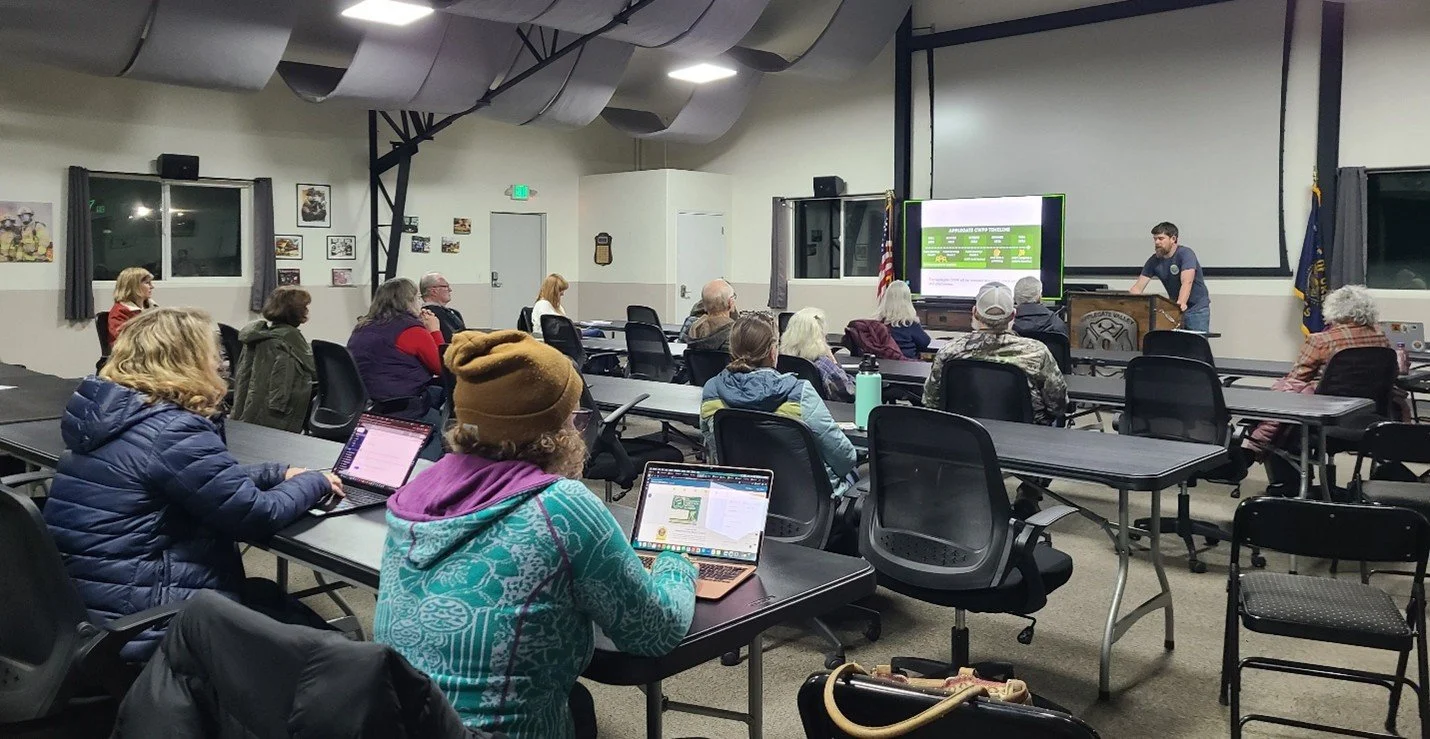
Photo: The Ruch public meeting at Applegate Fire District #9 Training Building on January 13, 2026. Photo by Amelia Liberatore (SOFRC).
Ruch represents about 25% of survey responses.
Ruch residents have greater support for prescribed fire than average.
Discussion centered around what landowners can do to protect their homes and how to receive financial reimbursement.
Tip: Contact Nathan Gehres of APWC (nathan@apwc.info) for information about possible financial and technical assistance with fuels reduction.

Map: Preliminary rendering of priority project areas in the Ruch Neighborhood based on initial survey data from Ruch community residents. Map by Dylan Goldey (SOFRC).
Click image to enlarge
Wilderville | January 15 | 8 attendees
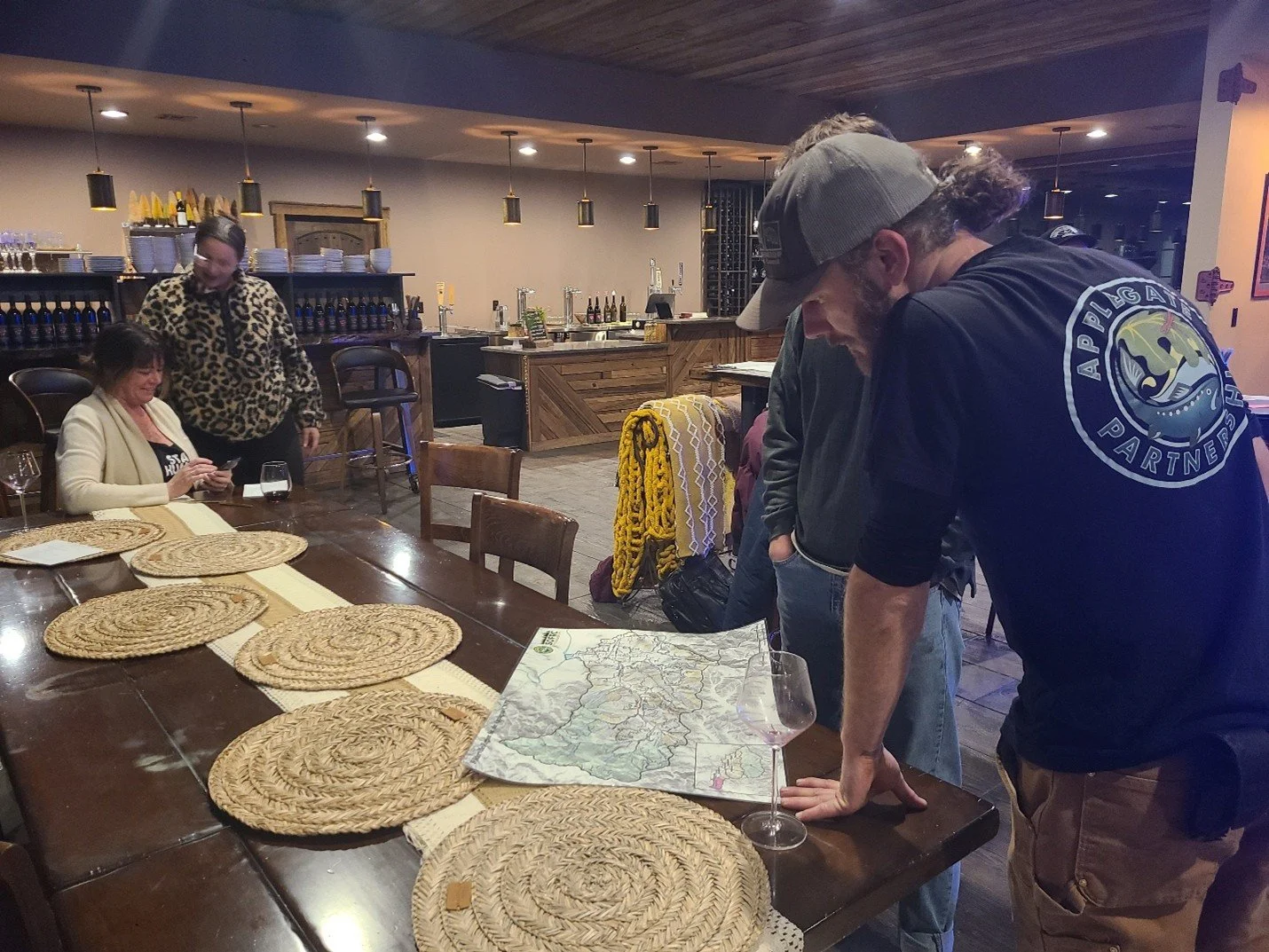
Photo: The Wilderville public meeting at Apricity Vineyard on January 15, 2026. Photo by Amelia Liberatore (SOFRC).
Wilderville/Jerome Prairie represents 2% of survey responses.
Wilderville residents value Water more than any of the other eight values ranked in the CWPP survey.
Discussion included concern for the evacuation of livestock. Attendees highlighted Stringer Gap Rd as an important area to consider for priority fuels reduction.
Tip: Review the comprehensive OSU Extension publication “Wildfires, smoke, and livestock: what can we do?”

Map: Preliminary rendering of priority project areas in the Wilderville Neighborhood based on initial survey data from Wilderville community residents. Map by Dylan Goldey (SOFRC).
Click image to enlarge
Applegate | January 20 | 58 attendees
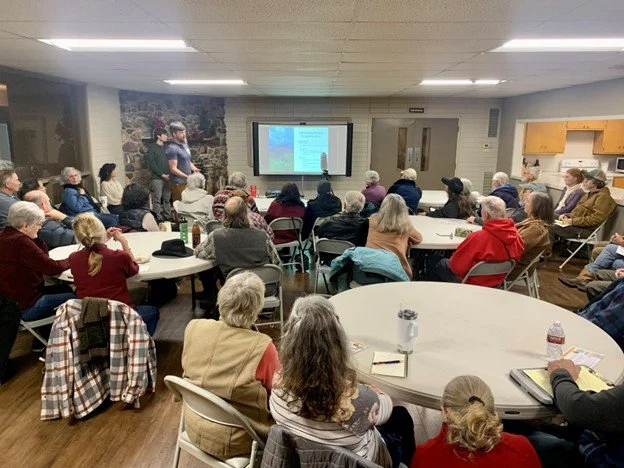
Photo: Standing room only at the Applegate CWPP meeting held at the Applegate Community Church, January 20, 2026. Photo by Charlotte Hyde (APWC).
Applegate represents nearly 50% of survey responses.
Applegate residents have less support for prescribed fire than average.
Discussion centered on how and where fuels reduction projects will be implemented. Remember, the CWPP is a strategic plan, not an implementation plan and any projects on public land will still require a public comment period.
Tip: Look to Oregon State Fire Marshal for dependable resources on home hardening recommendations that don’t come from a salesperson. For free property assessments, contact your local fire district or Firebrand Resiliency Collective.

Map: Preliminary rendering of priority project areas in the Applegate Neighborhood based on initial survey data from Applegate community residents. Map by Dylan Goldey (SOFRC).
Click image to enlarge
Murphy | January 26 | 3 attendees
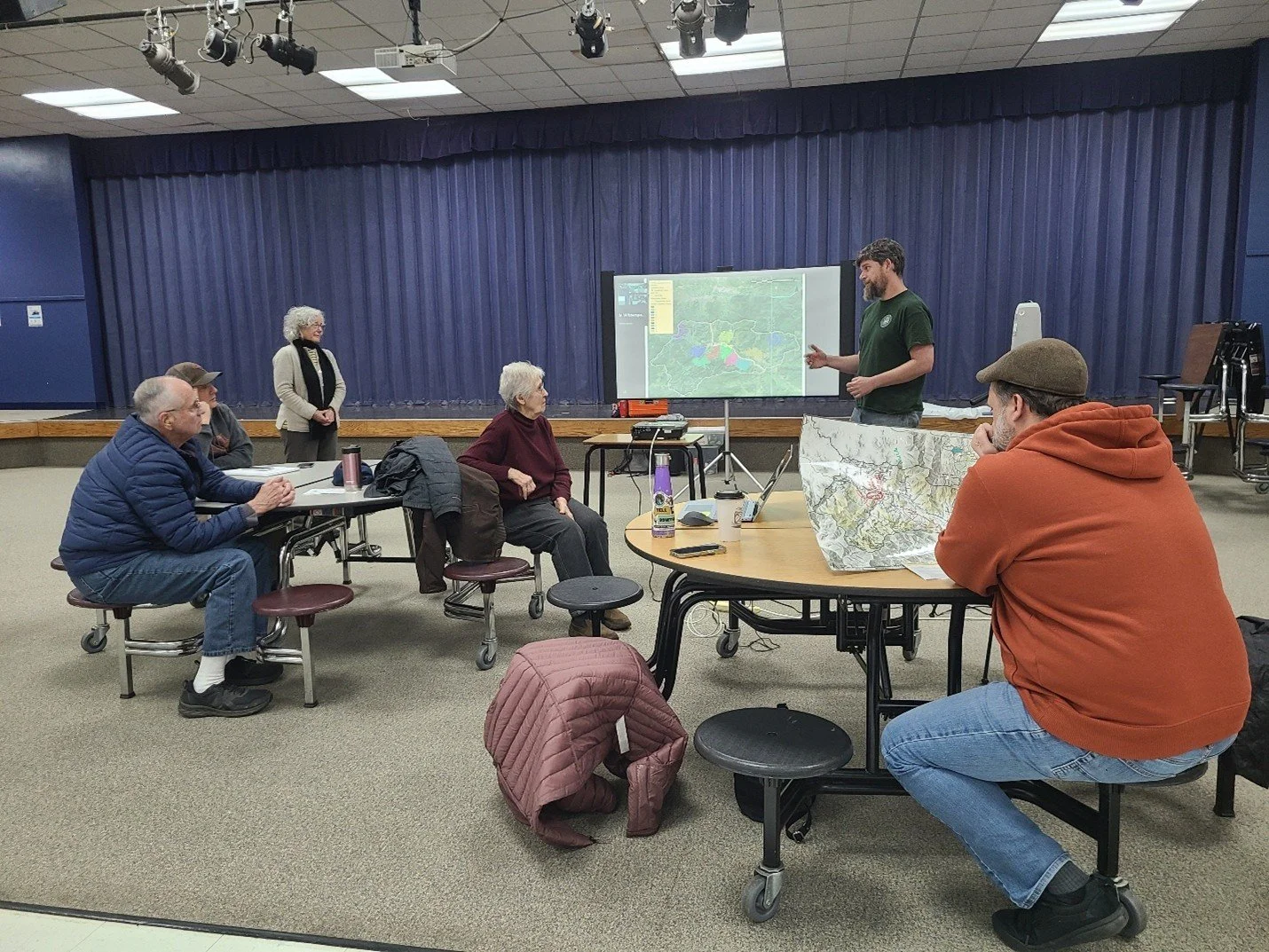
Photo: The Murphy public meeting at Hidden Valley High School on January 26, 2026. The three Murphy residents in attendance are seated at left. Photo by Amelia Liberatore (SOFRC).
Murphy represents about 4% of survey responses.
Murphy residents have especially strong support for fuels reduction and their top value is Wildlands Health.
Attendees approved of the initial rendering of proposed fuel reduction projects but indicated that broader public reactions may be mixed.
Tip: Share information about the CWPP with your neighbors, community group, or school by visiting applegatepartnership.org/cwpp

Map: Preliminary rendering of priority project areas in the Murphy Neighborhood based on initial survey data from Murphy community residents. Map by Dylan Goldey (SOFRC).
Click image to enlarge
Williams | January 29 | 33 attendees
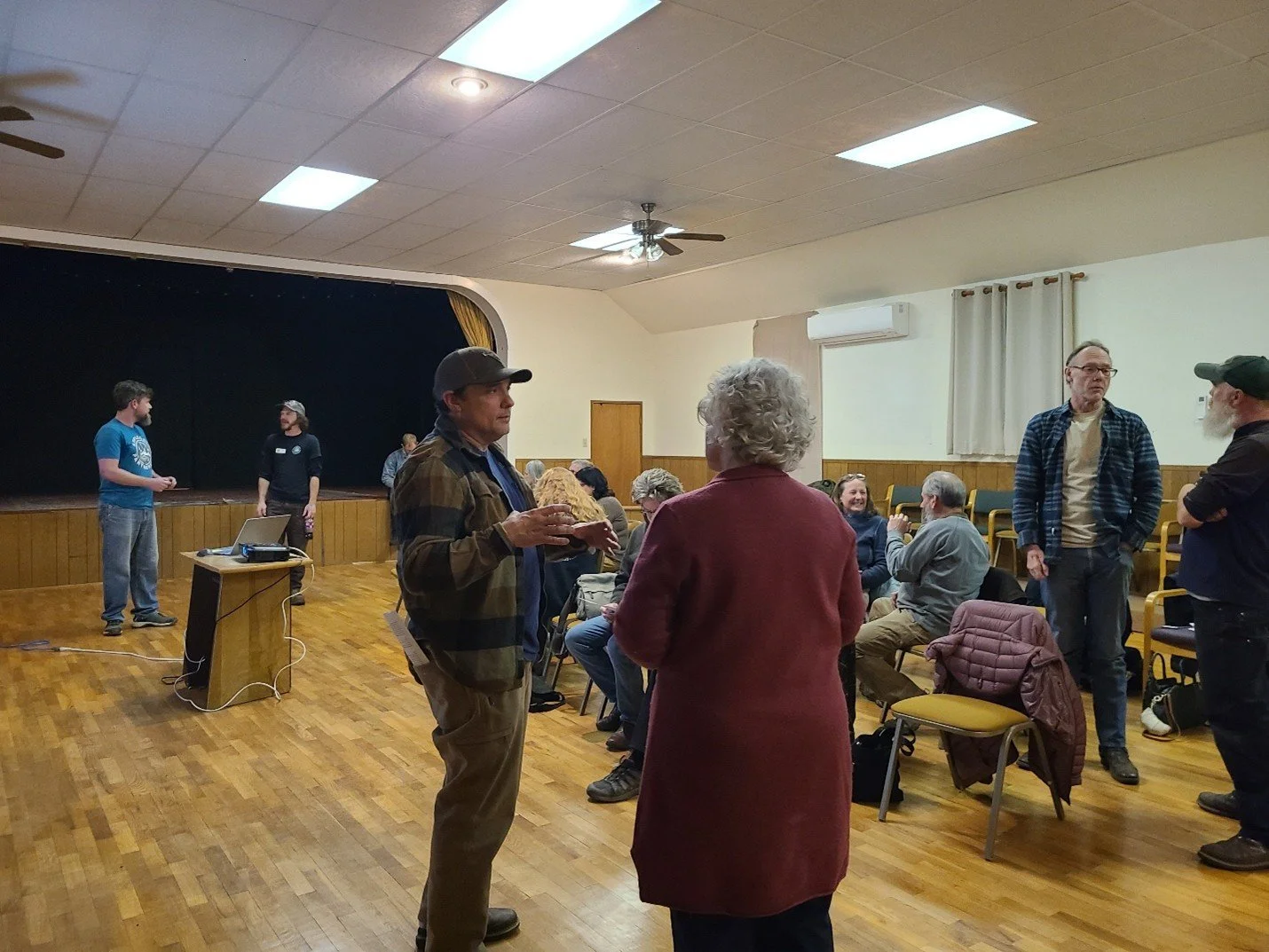
Photo: The Williams public meeting at Williams Grange on January 29, 2026. Photo by Amelia Liberatore (SOFRC).
Williams represents about 15% of survey responses.
Williams residents have higher-than-average support for prescribed fire. Fewer than half have a go-bag ready during wildfire season.
Most attendees expressed concern about fuels reduction on public land, emphasizing the desire for fuels reduction on ingress/egress routes and home hardening/defensible space projects.
Tip: Check out SOFRC’s Prescription for Safety (P4S) case study for inspiration on starting a private land roadside treatment project in your neighborhood. A PDF of the report is on SOFRC’s website under the Science Delivery tab and Fire Science for Neighbors subtab.

Map: Preliminary rendering of priority project areas in the Williams Neighborhood based on initial survey data from Williams community residents. We learned during the Williams public meeting that community members do not support fuel reduction projects on public lands. Map by Dylan Goldey (SOFRC).
Click image to enlarge
Have you taken the survey yet?
Only about 1% of Applegate residents have taken the CWPP survey so far. We would love to reach at least 10%! The survey is the best way to contribute directly to the CWPP process. Help us reach as many Applegaters as possible by sharing the link within your social circles. Need a printable version? Let us know and we can help make that happen!
Please note that the fourth question (ranking the importance of protecting values from wildfire) assumes that the higher the score, the more willing you are to see fuels reduction treatments be implemented to protect that value. For example, a rating of 4 or 5 for Biodiversity will indicate that you want to prioritize treatments that will protect habitat from severe wildfire. That doesn’t necessarily mean that treatments will happen within the valued habitat, but they may be optimal in overcrowded forest nearby.
The survey will be open until April 1, 2026.
Still unsure what the Applegate CWPP is?
The Applegate CWPP is a planning document that will propose priority fuels reduction projects and recommend actions for community members, landowners, and agencies to reduce wildfire risk and boost resilience. CWPPs are required for many wildfire-related grant applications, including those for defensible space projects. The Applegate CWPP will identify where fuels reduction projects would be most cost-effective in reducing wildfire risk and meet the needs of communities, fire districts, and other stakeholders. Details about implementation of those projects will be determined when an organization, such as APWC or a local fire district, applies for grants. Projects on public land will include a public comment period before implementation - the CWPP does not allow for that important step to be skipped.
About the planning process
Applegate Partnership & Watershed Council (APWC) is leading the Applegate CWPP update effort, with support from Southern Oregon Forest Restoration Collaborative (SOFRC) and A Greater Applegate (AGA). APWC obtained funding for this project through the US Forest Service Community Wildfire Defense Grant in 2024.
The original Applegate Fire Plan was published in 2002. This was the very first CWPP in the nation! A lot has changed since then: the Applegate population has grown, summer heat and drought intensified, countless conifers have died, and massive wildfires have become more common and strain suppression budgets and resources. But some things haven’t changed: fire is still essential to the health of Southern Oregon ecosystems. And, of the three driving factors of fire behavior (weather, topography, fuels), the only one we can control is fuels. That’s why it is essential to identify the most cost-effective places to do fuels reduction - both for forest health and community safety.
