Riparian Restoration
APWC’s riparian restoration work focuses on removing blackberries and other invasive species without the use of herbicides, then replanting with native trees and shrubs to restore healthy streamside habitat. These projects improve shading, stabilize streambanks, and provide habitat for fish and wildlife. We partner with BLM, Jackson County, and private landowners to restore and maintain riparian areas at community parks like Cantrall Buckley and the Provolt Recreation Site, as well as other priority sites throughout the Applegate watershed.
Our Riparian Restoration Projects

Provolt Recreation Site Noxious Weed Removal
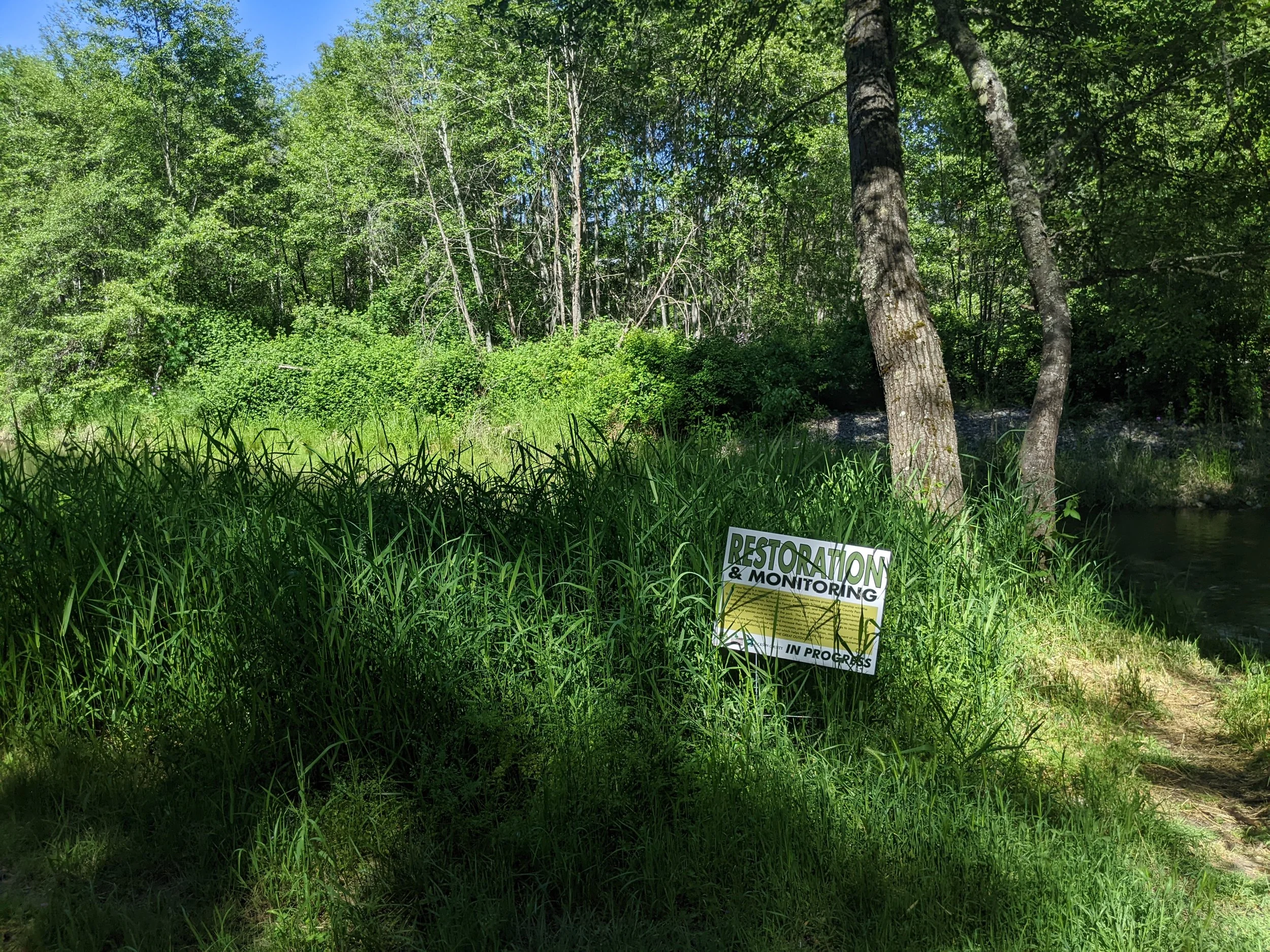
APWC staff has been conducting invasive species removal and maintenance within the 48-acre riparian area found at the 294-acre Provolt Recreation Site since 2017. The site borders both the Applegate River and Williams Creek. The focus has been on the removal of Armenian Blackberry (Rubus armeniacus) along with Poison Hemlock (Conium maculatum). The removal is done by using weed eaters and other non-chemical methods. There has been ~17,000 native trees and shrubs of 16 different species planted so far at the site. Species planted include: Ponderosa Pine, Incense Cedar, Indian Plum, Tall Oregon grape, Mock Orange, and more.
Cantrall Buckley Park Vegetative Management & Improvement Project
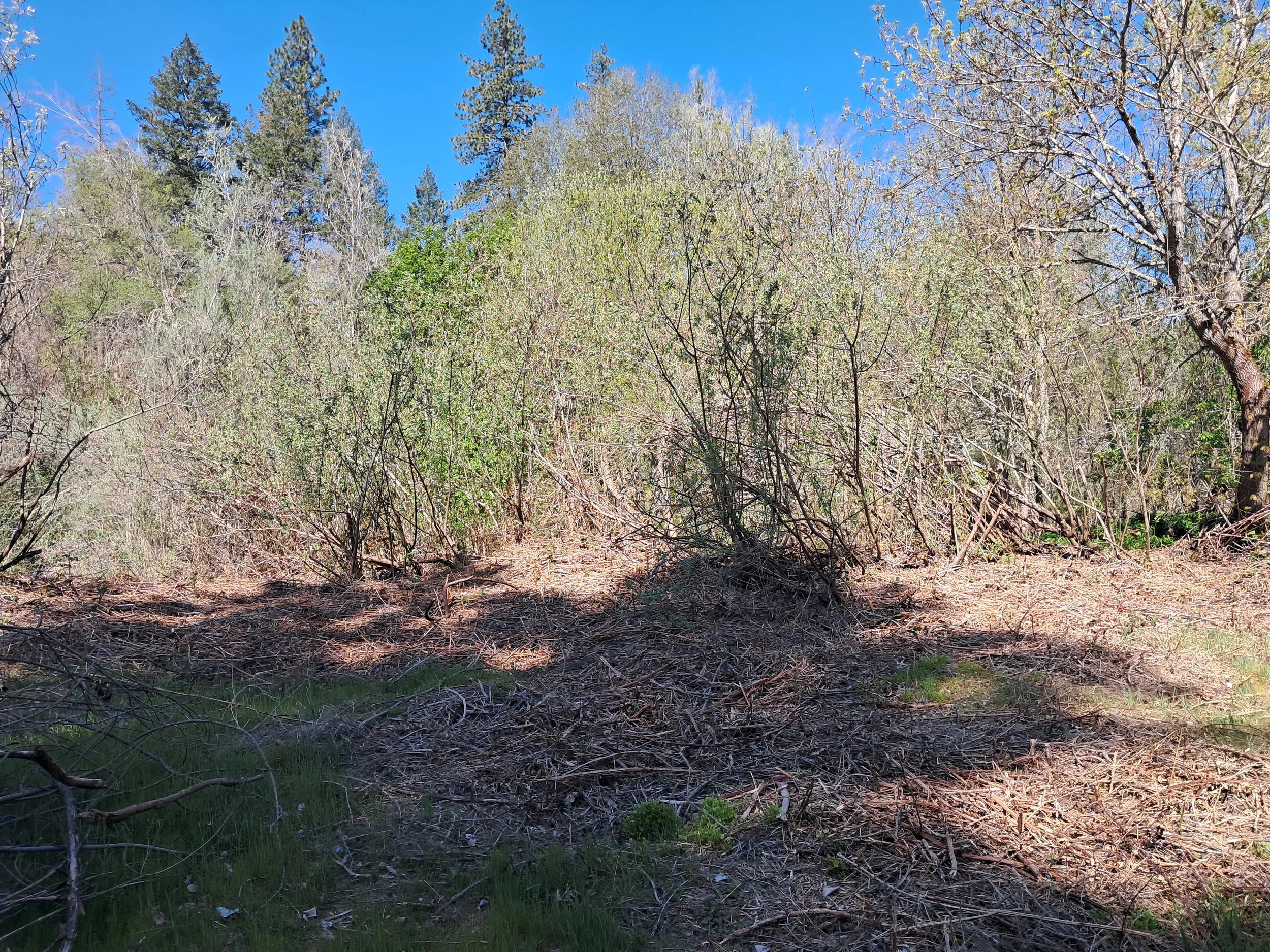
This project helped reduce populations of invasive species including Himalayan Blackberry, Poison Hemlock, and more found within 13 acres of Cantrall Buckley Park, which borders the Applegate River. Additionally, the existing vegetation was thinned to promote plant health and reduce fire risk within the park. Native plantings followed the treatments and APWC staff and community volunteers worked to improve and maintain the park-wide trail system.
Williams Creek Dyer’s Woad Treatment
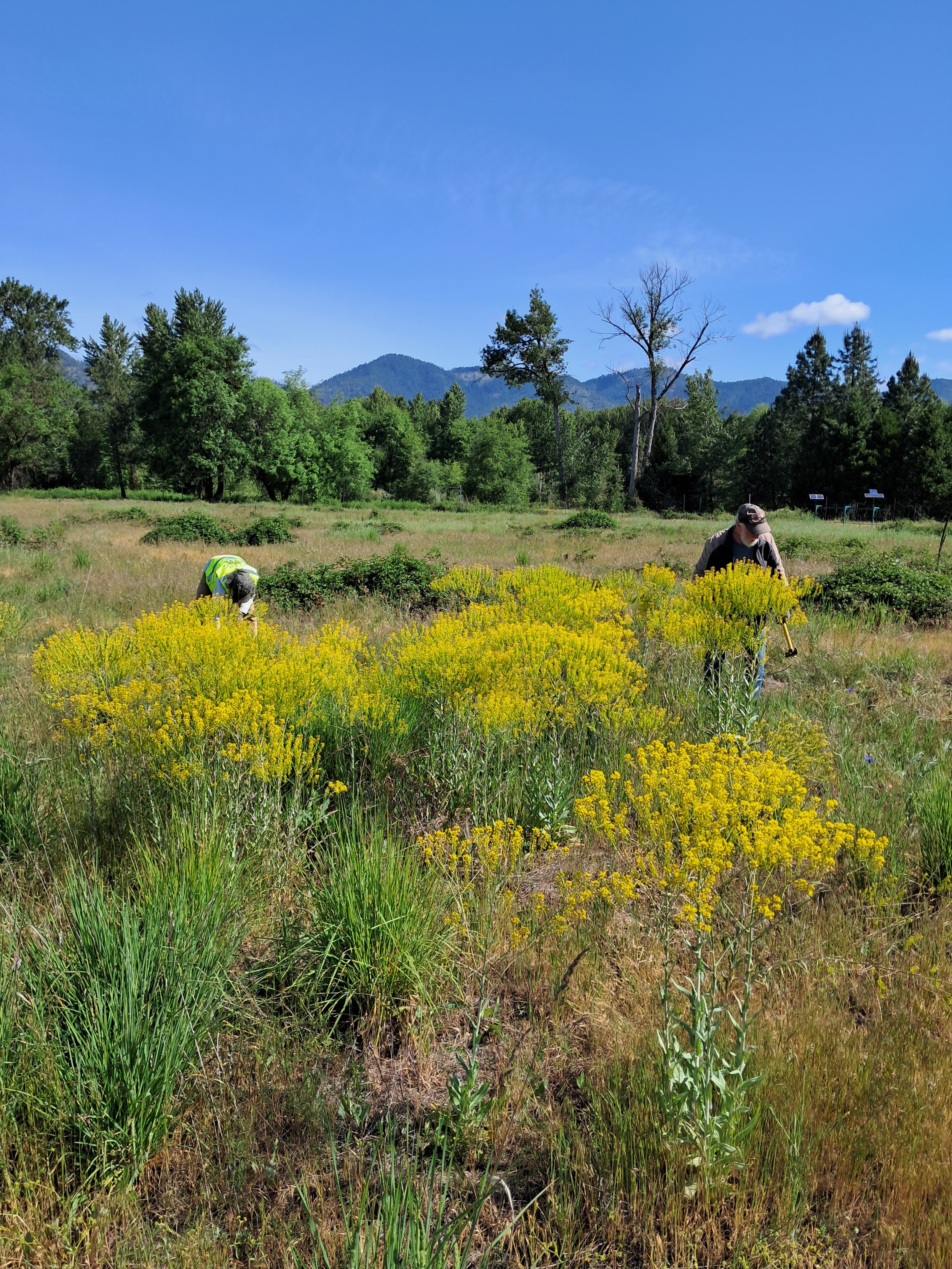
This project occurred on both private properties and BLM managed land bordering Williams Creek to its confluence with the Applegate River. Over 100 Dyer’s woad plants were hand-pulled within the 4.4 acre project area.
Removing Invasive Species from Riparian Areas:
Strategies & Permitting
An presentation by our Riparian Restoration Project Manager, Caleb Galloway
OSU Land Stewards: April 2, 2025