
What’s Up? Sky Objects To Watch For Through May 2027
by Barbara Summerhawk & Charlotte Hyde
In the constant whirl of everyday life, it’s easy to forget that we are merely specks on a moving rock in the vastness of space. If you ever want a dose of perspective, just look up. The night sky is a revolving theater starring the celestial bodies that share our universe.
Barbara Summerhawk, resident astronomer of Applegate After Dark, has prepared a guide to the next several months of night sky:
September
The Perseus meteor shower peaks mid-August, but a good number of meteors can usually be seen two weeks on either side of those dates; keep your eyes open after dark (towards the Northeast might be best) and see if a boloid (bright meteor) shoots across the sky
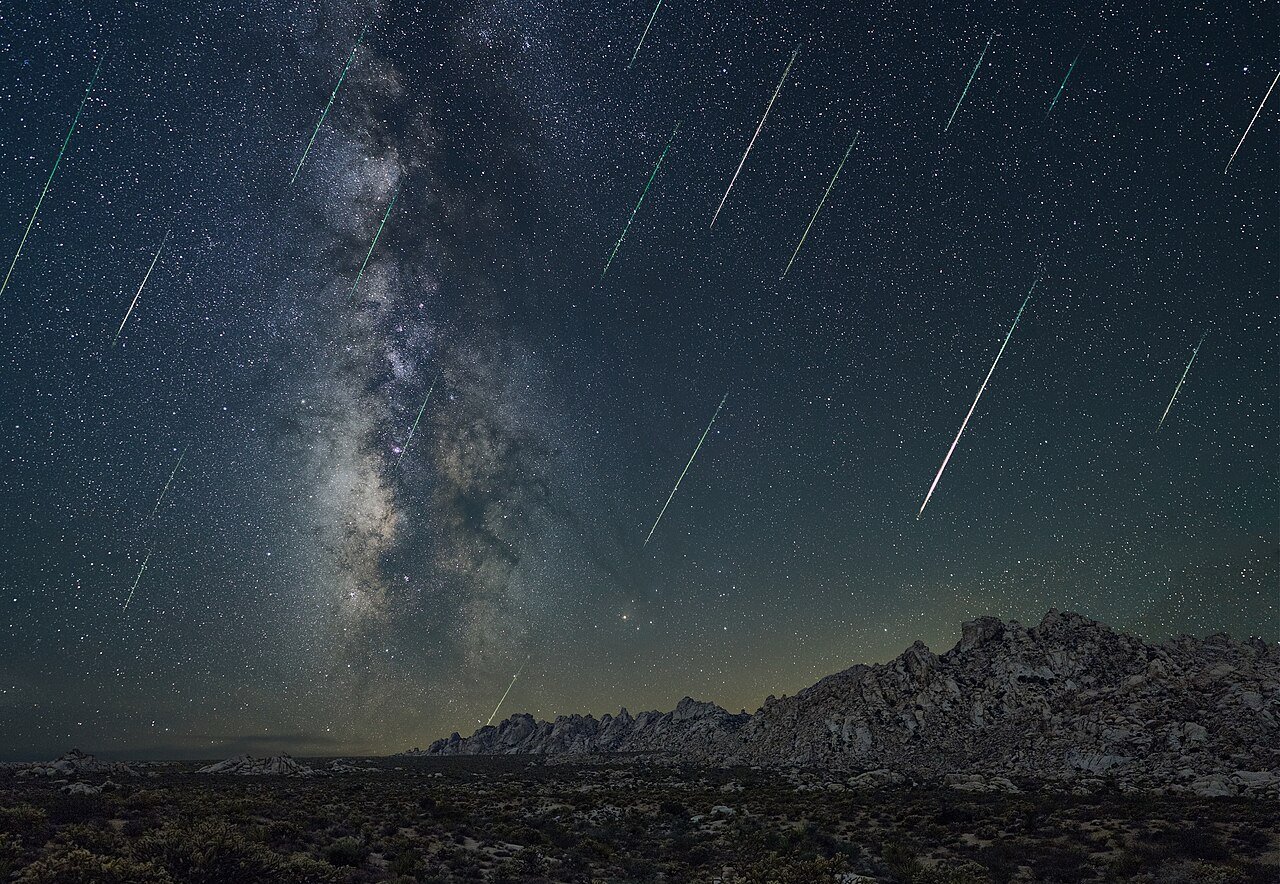
The 2021 Perseids over the Mojave National Preserve. Photo by Jim Vajida.
Our galaxy, the Milky Way, flows across the sky from Cassiopeia in the north, through the Summer Triangle overhead, with the bright stars Vega, Deneb, and Altair at the corners. It then goes on down into Sagittarius along the southern horizon. The dense star clouds in that constellation are easily visible as we look into the center of our galaxy.
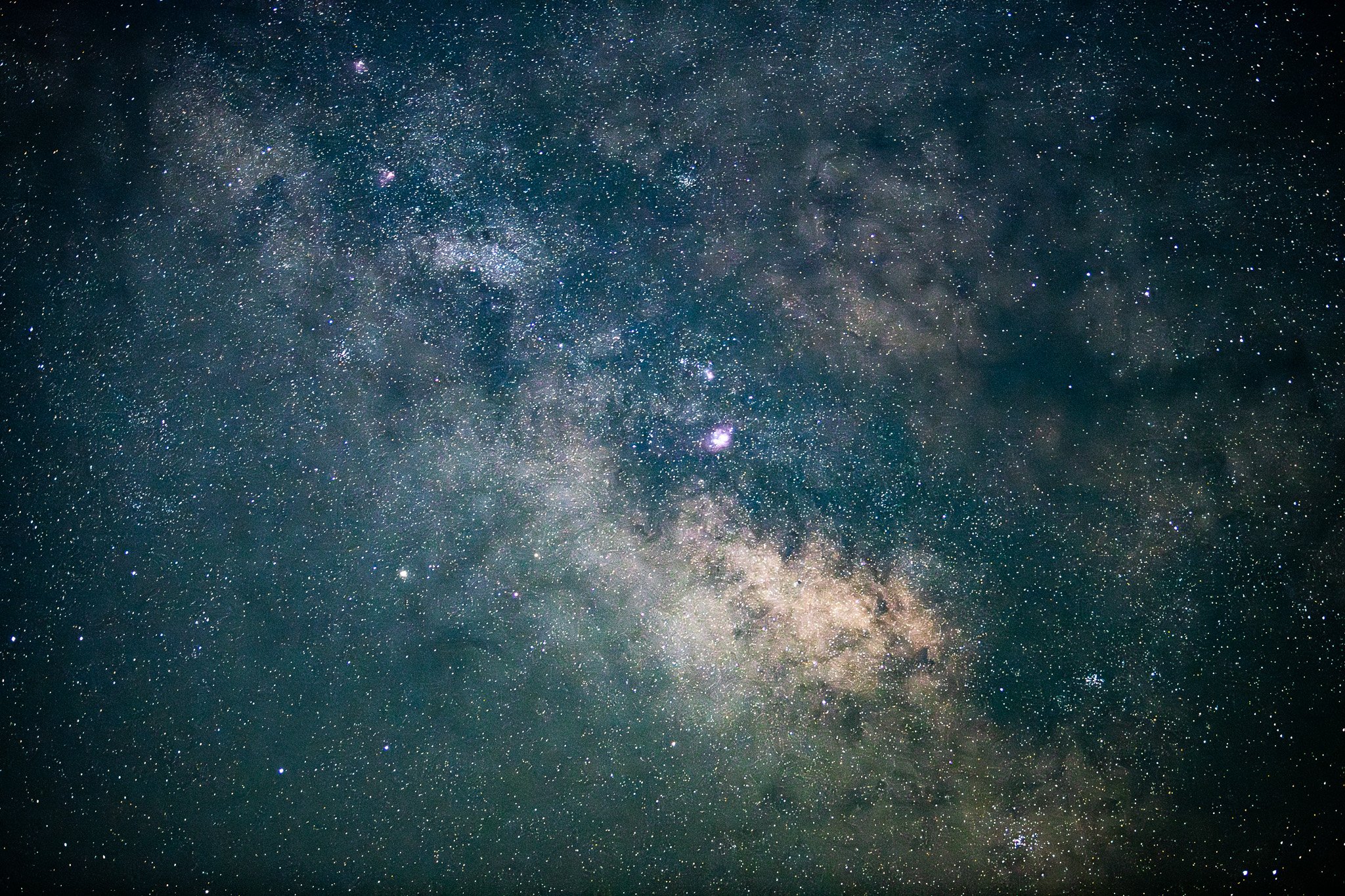
The milky way over Provolt Recreation Site. BLM photo by Kyle Sullivan.
October-November
Rising in the eastern sky is the great square of Pegasus, the winged horse. Its star Alpheratz connects to the constellation of Andromeda, where we can see Andromeda, our closest neighboring galaxy, with our naked eyes. Its companion, M33, is close by. They are quite spectacular through a telescope, though on a dark night, they are just visible with the naked eye.
Still visible is the Milky Way, now slowly sinking into the west. The first stars of winter: Capella, in Auriga the charioteer, and Castor and Pollux, twins of Gemini, become visible in the east.
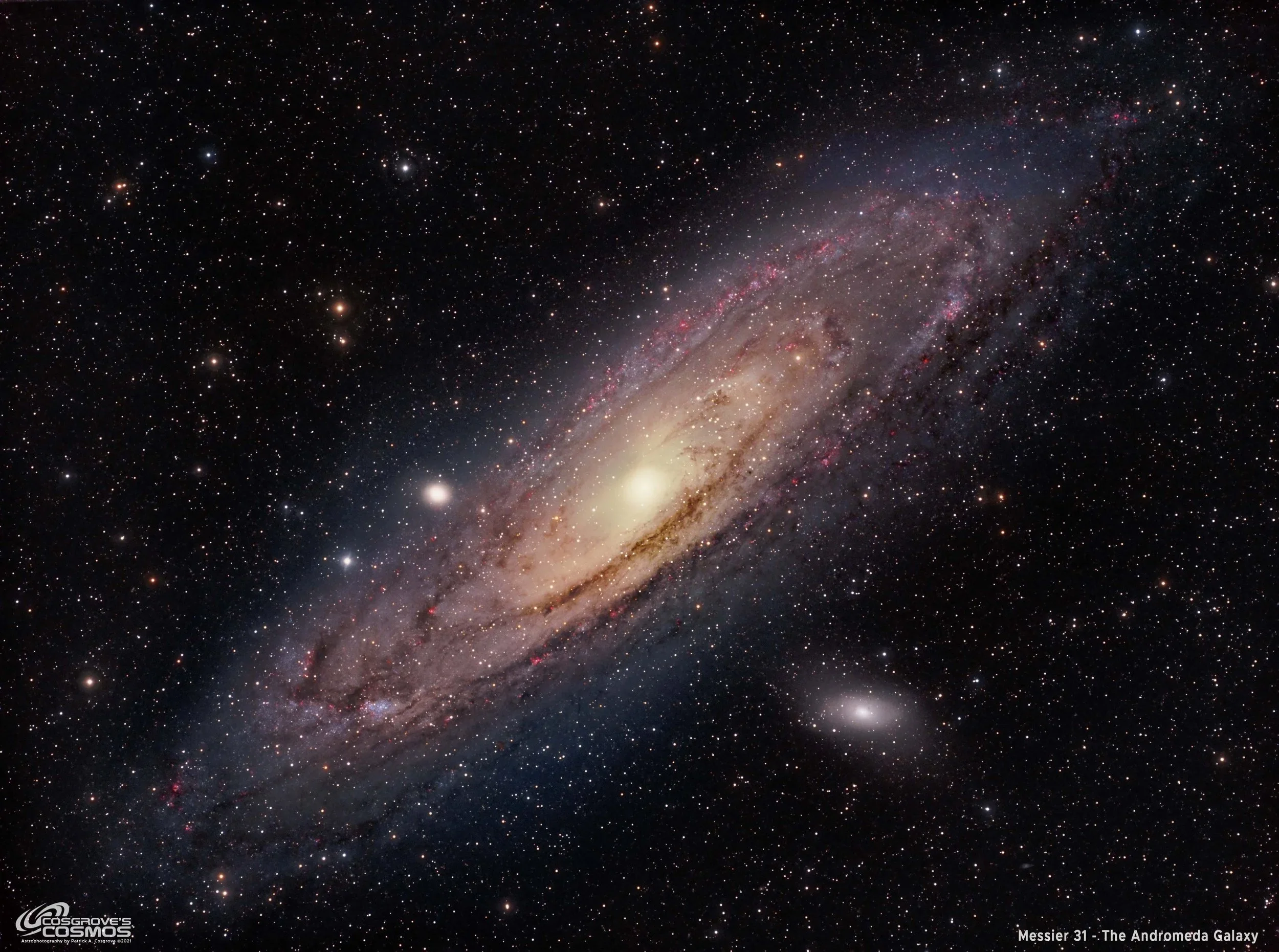
The Andromeda Galaxy, M31, by Patrick A. Cosgrove.
December-January
Orion the hunter is in full stride across the sky, with the bright stars Rigel and Saiph forming his knees and Betelgeuse and Beletrix forming his shoulders. We can clearly see his belt and dagger, which contains the Great Orion Nebula, a stellar nursery, with the naked eye. Sirius, the brightest star in the sky, blazes below Orion, in Canis Major. It is called the “Dog Star” as it is in the big dog constellation, one of two dogs following the hunter. Procyon, another bright first-magnitude star, is in Canis Minor, the little dog, just up above to the Northeast of Sirius.
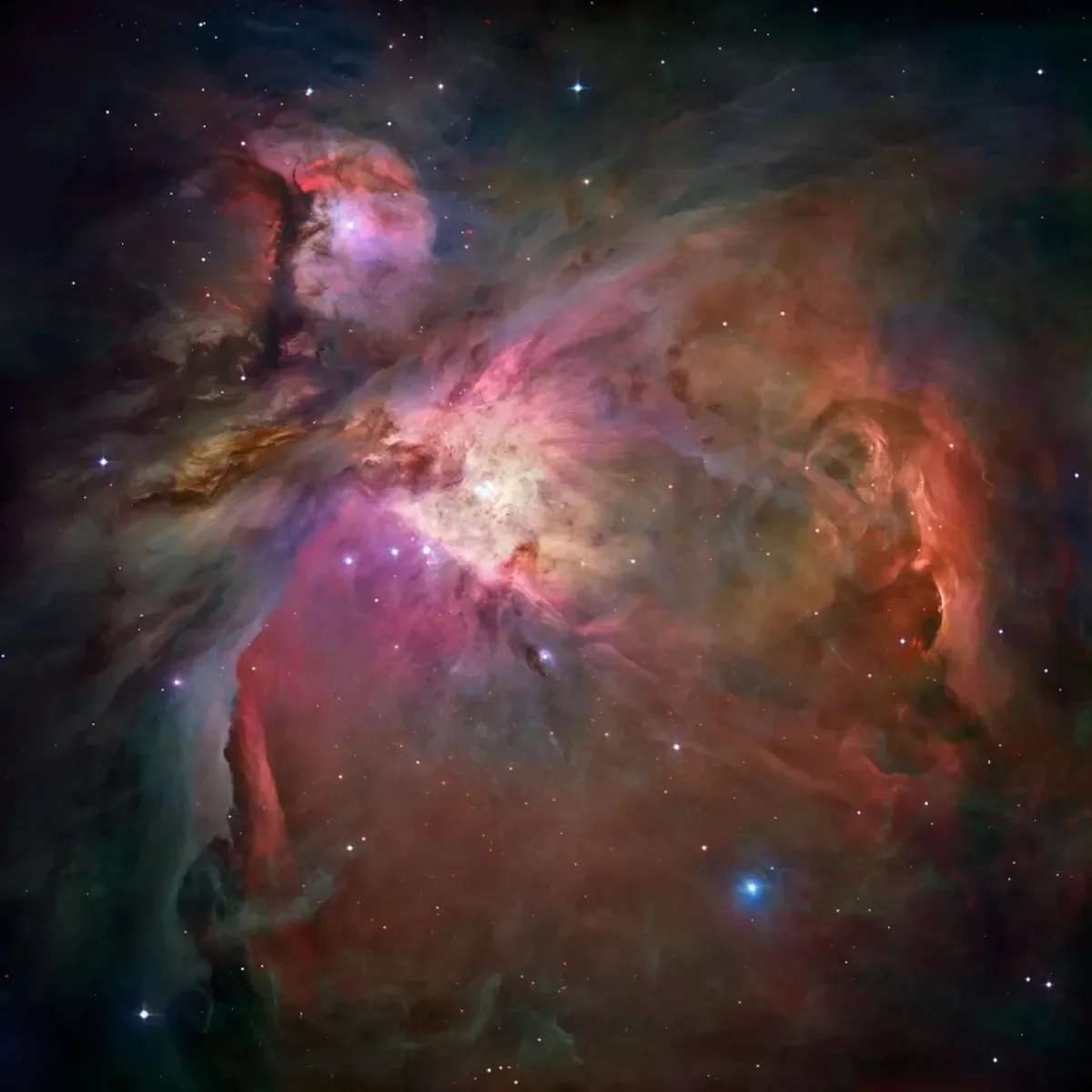
M42, the Great Orion Nebula. Photo by NASA/ESA, Hubble Space Telescope.
February-March
As Orion and his dogs sink towards the east, the constellation Bootes (the herdsman), with the bright star Arcturus, becomes visible.
Look north to see the circumpolar constellations, seen all year round rotating about Polaris, the North Star. There are five circumpolar constellations: Ursa Major (containing the Big Dipper), Ursa Minor (the little bear), Cassiopeia, the queen (a big W marks this constellation) Cepheus the king, and Draco the Dragon. If we follow the curve of the Big Dipper’s handle, it will lead us to Arcturus.
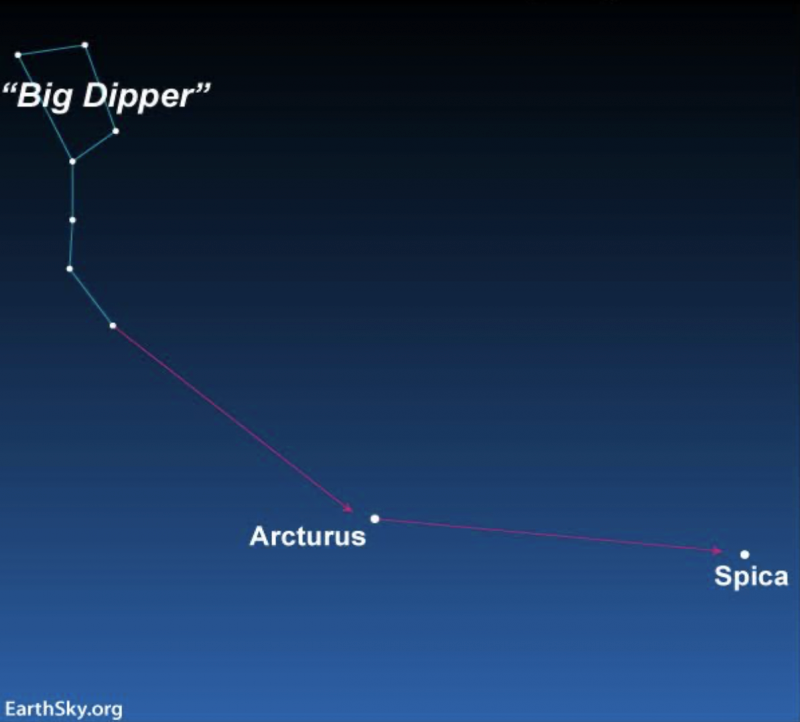
Map of the big dipper with its curve to Arcturus. Image: EarthSky.org.
April-May
These two months see the rise of Vega, the headliner of the summer skies. Before Vega rises in all its bright blue glory comes the constellation of Hercules. Named after the famed strongman of Greek legend, the constellation contains M13, the finest globular cluster in the sky.
Globular clusters are densely packed with old stars, and most lie just outside the galactic plane. They appear as little pieces of fuzz in binoculars, but through a telescope, there is some resolution of the stars in the cluster. It can be seen with the naked eye; check the drawing for information on how to find Hercules and where exactly M13 is.
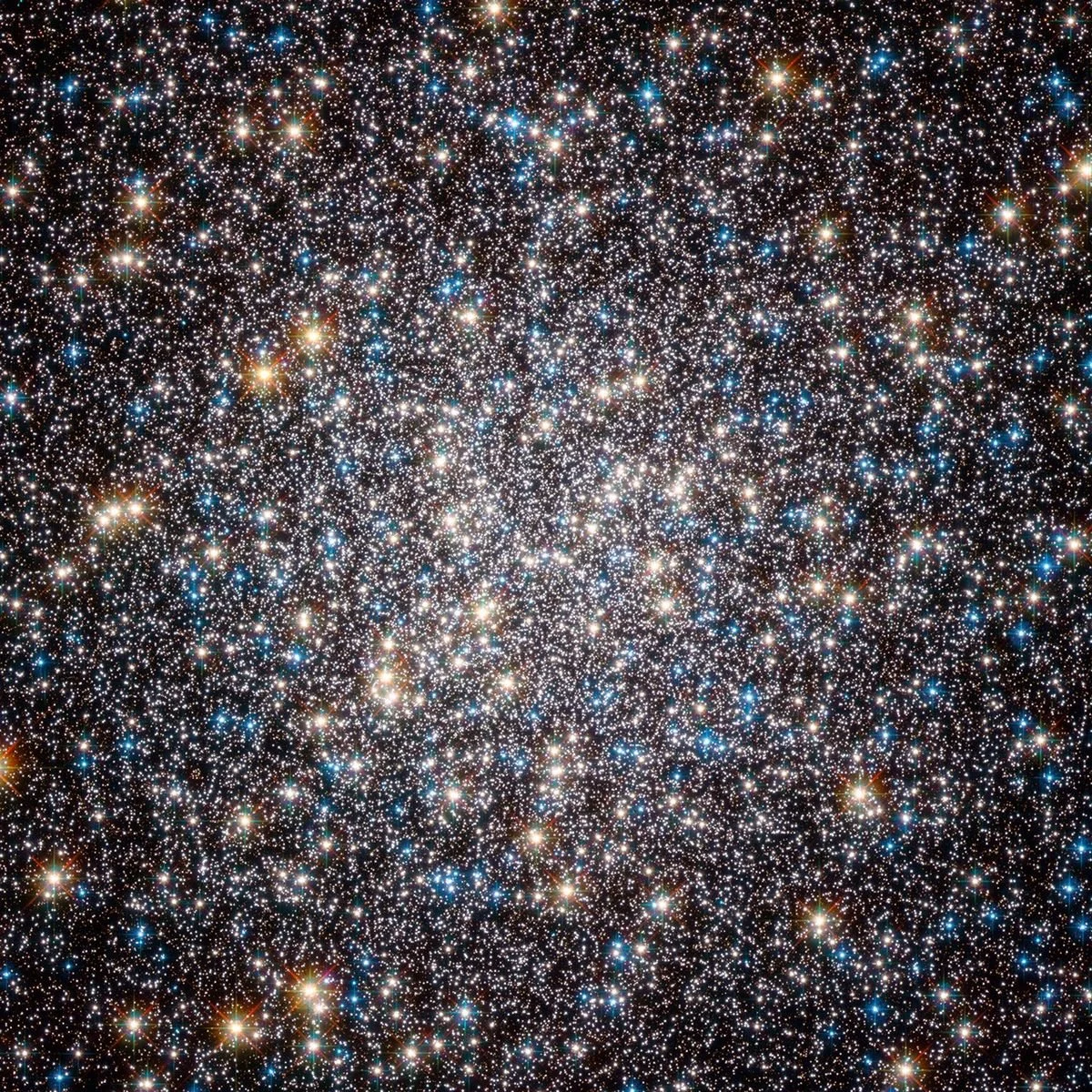
Globular cluster M13. Photo by NASA/ESA, Hubble Space Telescope.
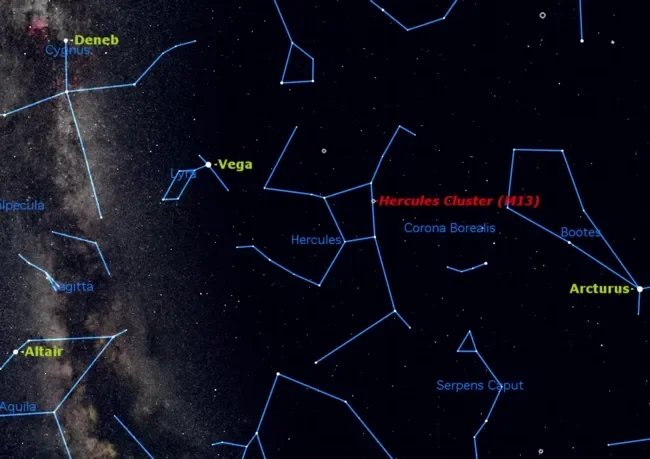
Map of M13 within the constellation Hercules. Image: Starry Night Software.
As we make our annual pilgrimage around the sun, keep your eyes open (and upward), and stay tuned for future night sky updates!
Tip: On any given night, check which planets are visible in real time on the Night Sky Tonight page of timeanddate.com:
